
Degrees without doing: the absence of project based learning and skill based education
A graduate walks into a job interview with excellent marks but leaves without clarity. Years of study feel disconnected from real work. This experience reflects a wider issue in higher education, where classrooms still reward memorization over application. Although degrees promise readiness, many graduates lack confidence because skill based education remains an afterthought rather than a foundation.
The silent gap between classrooms and careers
Higher education once focused on shaping thinkers. However, today’s industries demand professionals who can act. While lectures explain concepts, they rarely show real usage. This gap is where online industry skill courses become essential, as they bridge theory with real-world application. As a result, many students still struggle when faced with practical tasks, and employers are forced to invest additional time and money retraining new hires.
Common signs of this gap include:
- High academic scores but weak hands-on ability
- Limited exposure to industry tools and workflows
- Fear of real-world problem solving
- Dependence on certificates instead of competence
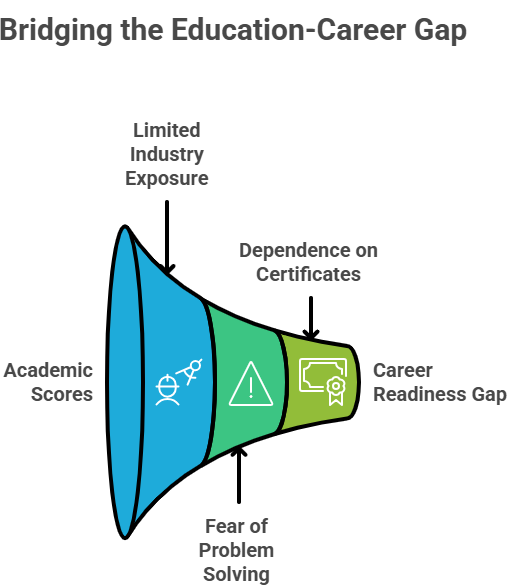
Therefore, degrees alone no longer guarantee career readiness.
Why skill based education is missing from higher education
Many institutions still follow outdated academic models. Because rigid curricula dominate, projects receive less importance than exams. Moreover, limited industry exposure among faculty deepens the issue. Consequently, learning becomes passive and theoretical.
When skill based education is absent, students miss opportunities to experiment, fail, and grow. For instance, students design ideas only on paper. Similarly, management students analyze cases without building solutions. Over time, this disconnect reduces confidence and creativity.
Learning through doing changes everything
In contrast, project-driven learning creates clarity. It places students in real scenarios. It encourages problem solving through action. As a result, learners adapt faster and think independently.
Key benefits of learning by doing include:
- Stronger retention through practical application
- Clear understanding of workplace expectations
- Job-ready portfolios instead of empty resumes
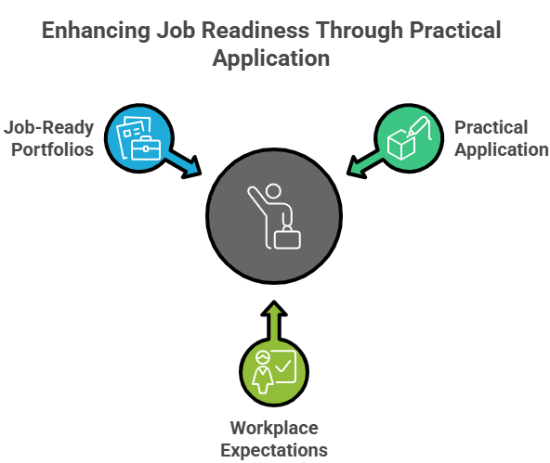
Because learners apply knowledge immediately, motivation naturally increases.
The role of online industrial skill platforms
Online platforms now bridge what traditional systems miss. They offer real projects, mentor guidance, and industry-aligned challenges. Moreover, they focus on outcomes, not just content. Through this approach, skill based education becomes measurable, relevant, and impactful.
Ultimately, higher education must evolve. Degrees should reflect ability, not attendance. When learning shifts from listening to building, students stop fearing the future. Instead, they step forward prepared, confident, and capable.